Agentic Shift, the deployment program by Atelier Agentic
Your developers already use Claude Code or Cursor, each in their own way.
In 6 to 8 weeks, the team turns it into a collective practice, on its own code. For CTOs, Heads of Engineering and tech leads who see the gap widening between their best developers and the rest of the team, and want gains that stay when the consultant leaves.
The problem
Without a collective framework, the organization does not capitalize on individual experiments.
Cursor and Claude Code are adopted informally. Result: uneven levels and no shared standard.
The good workflows stay in people's heads. The organization doesn't progress at the pace of its best developers.
The more scattered the adoption, the more standardization will cost. The time to act on the foundations is before habits set in.
Tools alone, without a framework
- A temporary productivity dip before the gains: the DORA 2026 ROI calculator assumes −15% for three months by default.
- High-adoption teams merge 98% more PRs, but review time increases by 91%.
- AI-produced PRs wait 4.6 times longer for their first review: review becomes the bottleneck.
With a team framework
- The biggest returns come from the organizational system, not the tools: internal platform, workflow clarity, team alignment.
- When adoption is instrumented and measured, throughput becomes visible: +66% epics delivered per developer across 22,000 developers tracked.
- Realistic adoption target: 80% monthly active users within six months, measured, not self-reported.
Sources: Google DORA, The ROI of AI-assisted Software Development (2026) · Faros AI Engineering Report 2026 · LinearB, 8.1M pull requests (2026). The program's duration, 6 to 8 weeks, is that of the J-curve: we come out of it together, not each on our own.
The walkthrough
Three steps, one real project. No contrived demo, no slides.
| Weeks | Step | What we do | What comes out |
|---|---|---|---|
| 1 | Frame | Interviews with the team, inventory of current usage, maturity level, technical context. Choice of the project that will serve as support, with its real constraints. | A scope, measurable goals, an honest starting point. And a decision: we continue, or we stop there, one week billed. |
| 2 to 6 | Work in the field | Workshops and pair programming in your codebase. Context, skills, sub-agents, workflows, verification. From skeptic to convinced, each at their own pace. | A real piece of work shipped to production. The first conventions, tested. |
| 7 to 8 | Formalize | What worked becomes team practices: usage rules, review, permissions, per-task budget. Setting up adoption and cost tracking. | The playbook, the dashboard, a team that carries on alone. |
What the team gets
Concrete things, tested on your project, that remain after the engagement.
What you'll see at the end
Two objects, not slides. The playbook is written by the team during the program; the dashboard runs on your data.
Share of tasks run through the workflow, by team, week [n]. Sample values.
What we work on together
The building blocks that make an agent produce reliable work at team scale.
At Trusk, in 2026
Two cohorts, front then back and DevOps, 11 engineers, trained on their own codebase through to the production release of the v2 billing engine.
“We called on Alexandre for training in agentic development, and the result exceeded our expectations. His teaching is clear and accessible, and you immediately sense that he has deep mastery of his subject. Beyond the theory, the workshop approach let us build a real project during the training. I recommend him without hesitation.”
Nicolas, CTO at Trusk
Logistics platform, 3,000 orders a day
Translated from French
Who is involved
Me, at every step. No delegated instructor.
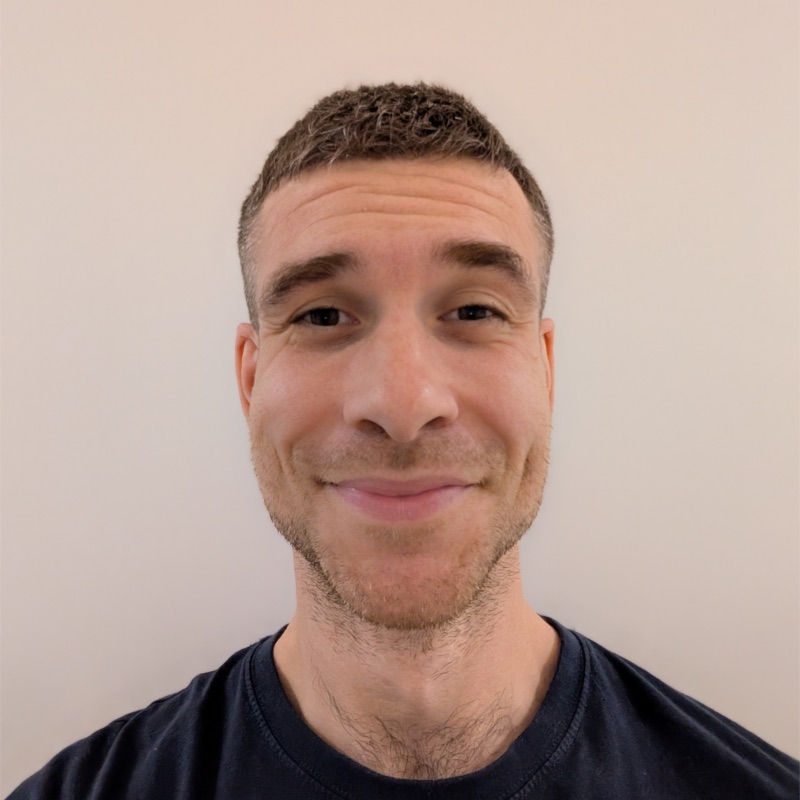
Alexandre Ollivier, freelance Forward Deployed Engineer, AI for Engineering
Ten years of full-stack TypeScript, three as VP Engineering on a platform of 3 million patients. In 2025, a complete EAI shipped to production in 20 weeks, 100% of the code produced by agents and 100% reviewed. The program is that workflow, handed over to your team.
Frequently asked questions
No. A two-day training course is a good starting point, not a framework: it delivers no project, no playbook, no measurement. Agentic Shift is a deployment program, on a consulting or run budget. If your company wants to fund a training component through an OPCO, it can go through a partner Qualiopi-certified provider.
No. The framing identifies the team's real starting point, whether it is already experimenting informally or structuring its first usage.
The shift runs on two to three teams in parallel, with a clear end. Sustaining a program across twenty teams is a different need: ongoing support, on a quarterly time-and-materials basis, where I train referents in each team and onboard new ones as we go. One can come before the other, it is not mandatory.
The playbook, the adoption and consumption dashboard, and a piece of work shipped to production. Everything is produced by the team during the program, not delivered afterwards.
The program runs on your accounts and your terms: Claude Enterprise or API, Bedrock, Vertex, or models hosted on your side. Usage rules, permissions and secrets management are part of the delivered framework, not an appendix.
A fixed price per team: from €15k excl. VAT for six weeks, framing included, quote after the first call. Week 1 is an exit point: if we stop, it is billed €3k and nothing else. Two or three teams in parallel at most.